
Blog SEO for Small Business: How to Write Posts People Find
A fictional auto shop already has a clear brake-repair service page. The owner then publishes a third blog note with almost the same heading: “Brake Repair: Everything You Need to Know.” The post retells the offer, asks the reader to book, and does not answer a different question. A customer, and a search system looking at the site, cannot tell why the new URL exists.
Blog SEO, in this guide, is the work of giving each post one job a person can use, writing it so the question is easy to see, and publishing it without stuffing a phrase or chasing a volume target. It is not a second service page under a new heading, and it is not a promise that a post will appear in a set number of weeks.
What blog SEO is, and what it is not
This work means writing posts that help a real reader and can be found for the question they actually ask. The useful version, for a small service site, is editorial: one post, one job, a clear opening, and a next step that belongs to that job. It is not a tool, a publishing quota, or a score.
Blogging for business, in a shop or a studio, is worth doing when a post answers a question the service page should not have to carry. A note about how a brake inspection works, or how to prepare for a family session, can help a person decide. A third retelling of “book this service” usually does not.
You may also hear the word order SEO blogging. In this article it is the same idea, not a second target: the post still needs one job, not a denser phrase.
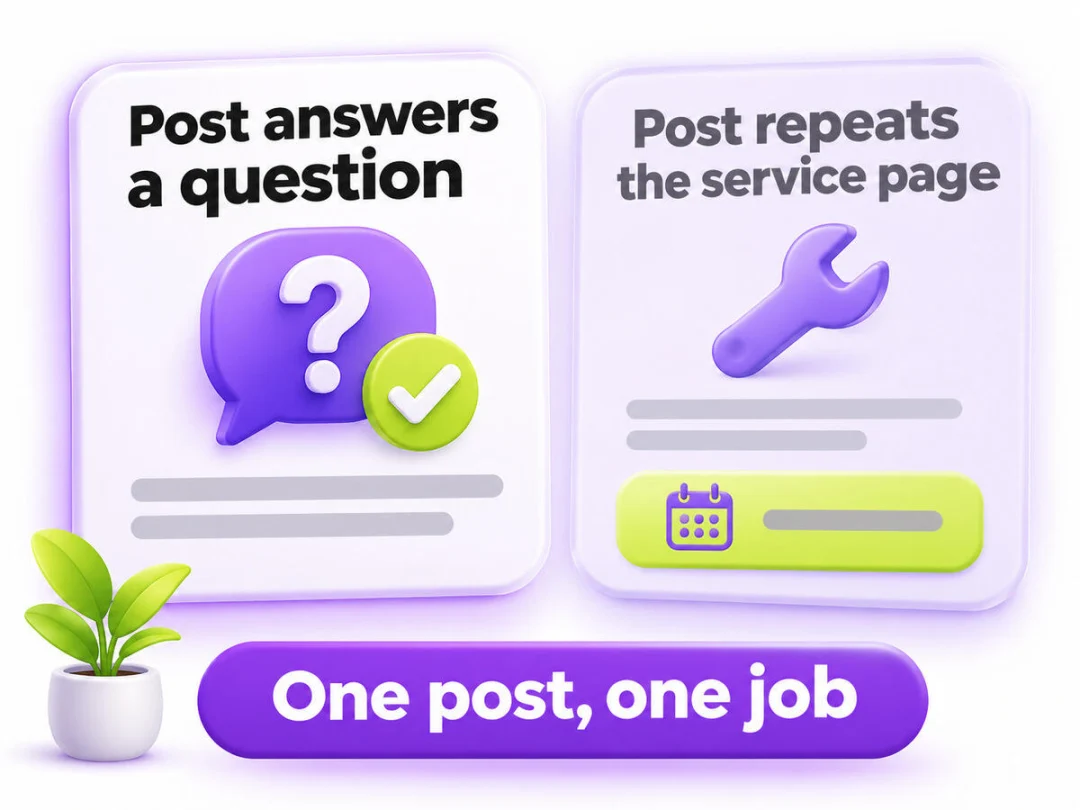
One post, one job
Before you write, state the job in one sentence. “Explain what a brake inspection includes, so a driver knows what to expect” is a job. “Cover everything about brake repair” is not. If you cannot name the question, you are not ready to publish a new URL.
A useful test is simple. After reading the title and the first paragraph, could a stranger tell what this page is for, and what it is not for? If the post could be swapped with the service page without anyone noticing, it does not yet have its own job.
It is not a second service page
A service page helps someone request or understand the offer itself: what is included, what is not, and how to ask for a visit. A post can mention that service and point to the service page when the reader is ready. It should not try to be a second booking page for the same commercial query.
This is why a blog note with the same heading as the service page is a weak idea, even if the sentences are slightly different. The intent is the same. The new URL does not add a question; it only adds another door to the same offer.
One post, one job
Pick the question before you write
The cheapest mistake is to start typing before you know which question the post will own. Choose the question first. Then write. Volume estimates, if you look at them at all, are a secondary check, not a reason to publish a page you cannot stand behind.
You do not need a long keyword report to do this well. You need a short list of the questions customers already ask, the pages you already have, and one gap that is worth a new URL.
Check the pages you already have
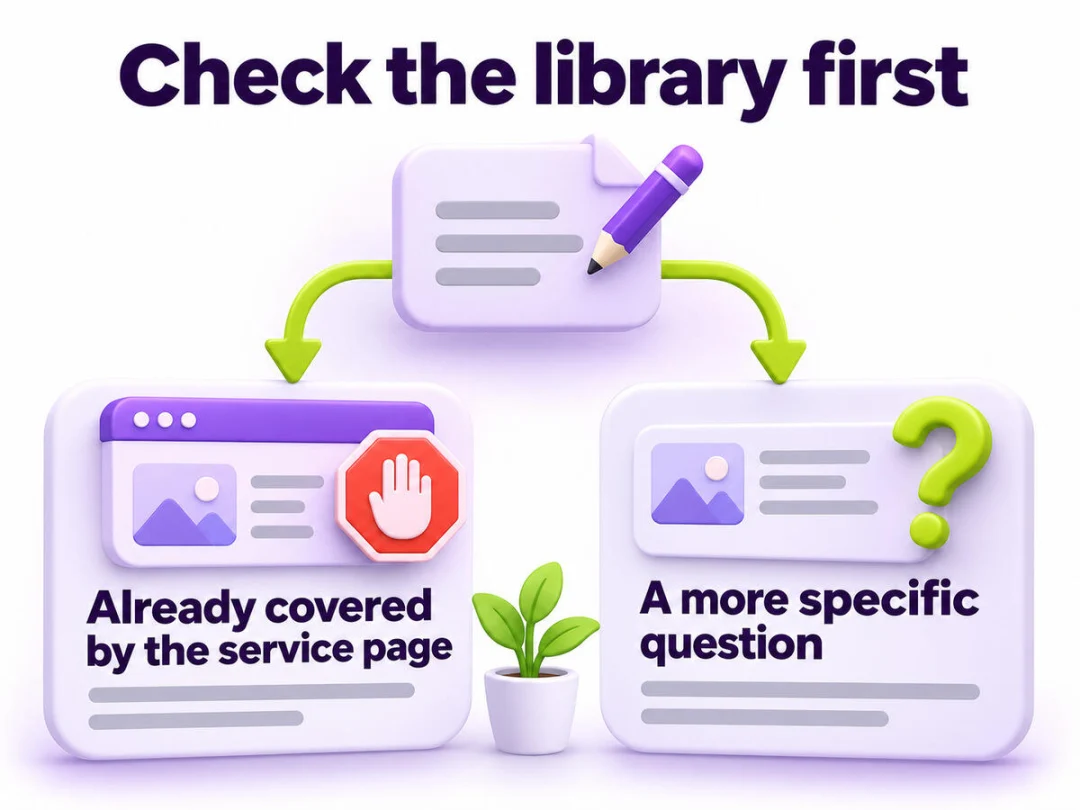
Open the service pages and the posts you have already published. If a page already answers the question, add the new detail there, or leave it alone. A new URL is useful when the question is different, not when you wanted a fresh date on the blog.
When you plan that new URL, map one primary query to each URL and check the pages you already have. This article will not repeat that research process. The habit that matters here is simpler: do not invent a post for a job that is already taken.
A more specific question is often enough
If the service page already owns “brake repair,” the blog should not try to own it too. A more specific question is often enough: what a brake inspection includes, how to tell a noise from a worn pad, or what to bring to a diagnostic visit. Those questions can mention the service and still leave the booking job on the service page.
If the second idea would otherwise compete for a broad term that is taken, give the new post a more specific query instead of writing another general note. This is not a second lesson in long-tail research. It is a way to keep the post’s job distinct.
Check the library first
Write the post so a person can use it
Once the question is clear, how to write a blog post for a small service site is mostly ordinary writing. You name the job, answer it in an order a person can follow, and stop when the question is done. SEO content writing, and the close craft of SEO copywriting, should serve that reader first. The phrases exist to make the page clearer, not to fill a count.
How to write a blog, in this narrower sense, is the process of writing that post. It is not a lesson in choosing a platform, installing software, or “starting a blog from scratch.”
A title and opening that name the job
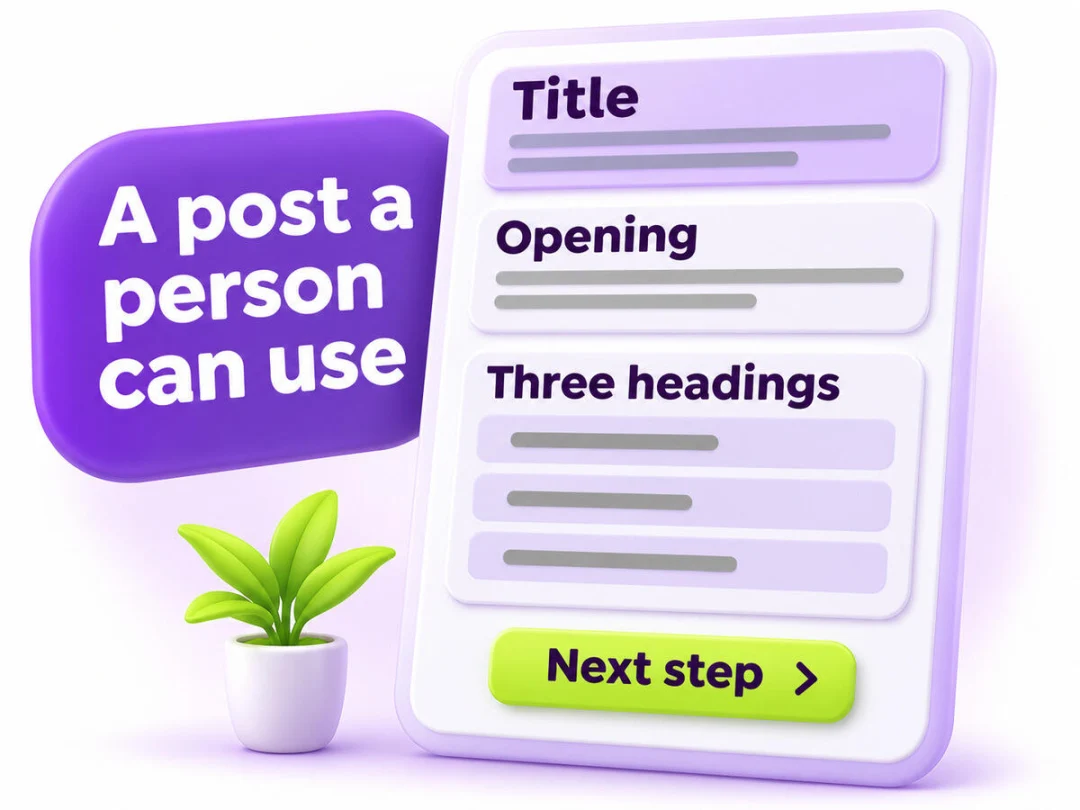
The title should say what the post will do. “What a brake inspection includes” names a job. “Brake Repair: Everything You Need to Know” names a service the site already offers. The opening should confirm the same job in the first lines, in language a customer would use, and then start answering it.
You may also hear the longer phrase how to write SEO friendly blog posts. The useful reading is the same: be explicit about the question, write naturally, and do not repeat the phrase until the text sounds forced. Keyword stuffing is filling a page with words in an attempt to manipulate results, including unnatural repetition. There is no official “optimal density.” Being clear matters; padding a heading with the same term does not.
A short, accurate title is enough. You do not need the phrase in every subheading. A meta description can help a person decide whether to open the page, but it is not a ranking lever this article will promise, and it cannot repair a post that never answers the question.
Headings, limits, and a real next step
Use headings to mark the parts of the answer, not to park extra phrases. Under each heading, answer that part. If a step or a limit matters, what is not included, when a shop will not do the job, what the customer should bring, say so. A reader should leave knowing what to expect.
An SEO blog post, in the teaching sense used here, has a visible skeleton: a title that names the job, an opening that starts the answer, a few headings that carry the parts, and a next step that fits that job. For the fictional shop, the next step on an inspection explainer is often a link to the brake service page, not a second sales pitch in every paragraph.
Keep the next step modest. If the person is ready to book, point them to the page that can take the request. If they are not, finish the explanation. Do not end every post with a demand to call now.
A short teaching outline for that fictional inspection post might look like this. It is an example, not a template you must copy, and not a measured result:
| Part of the post | What it should do | What to avoid |
|---|---|---|
| Title and opening | Name the inspection and start the answer | A second “brake repair” heading that matches the service page |
| Headings | Mark the steps and the limits | Repeating the same phrase in every heading |
| Next step | Point to the service page when the reader is ready to book | A sales close that turns the post into another offer page |
Publish without stuffing, then point to the right URL
When the post is ready, publish it as one clear URL with one job. Do not stuff the same phrase into the title, the headings, the captions, and the closing “for SEO.” If you need to say “brake inspection,” say it where a person needs the words. If a sentence only exists to host the phrase, cut it.
Content marketing for small business is a wider frame than this article. The part that belongs here is smaller: publish a post that earns its URL, then help the right page be the next step. You do not need a content calendar with a fixed number of posts, and you do not need to produce a series of thin notes in order to “look active.”
Internal links that support the job
Links should support the job you already chose. The explainer can point to the service page when the reader is ready to request the work. The service page can point to the explainer when a person needs the longer answer. Do not point every mention of a word at every page that contains it.
After you publish, point internal links at the page that should rank for that job, and keep the menu consistent with the same decision. This article will not repeat a lesson on hubs or sitewide architecture.
A post a person can use
A short inventory keeps new posts honest
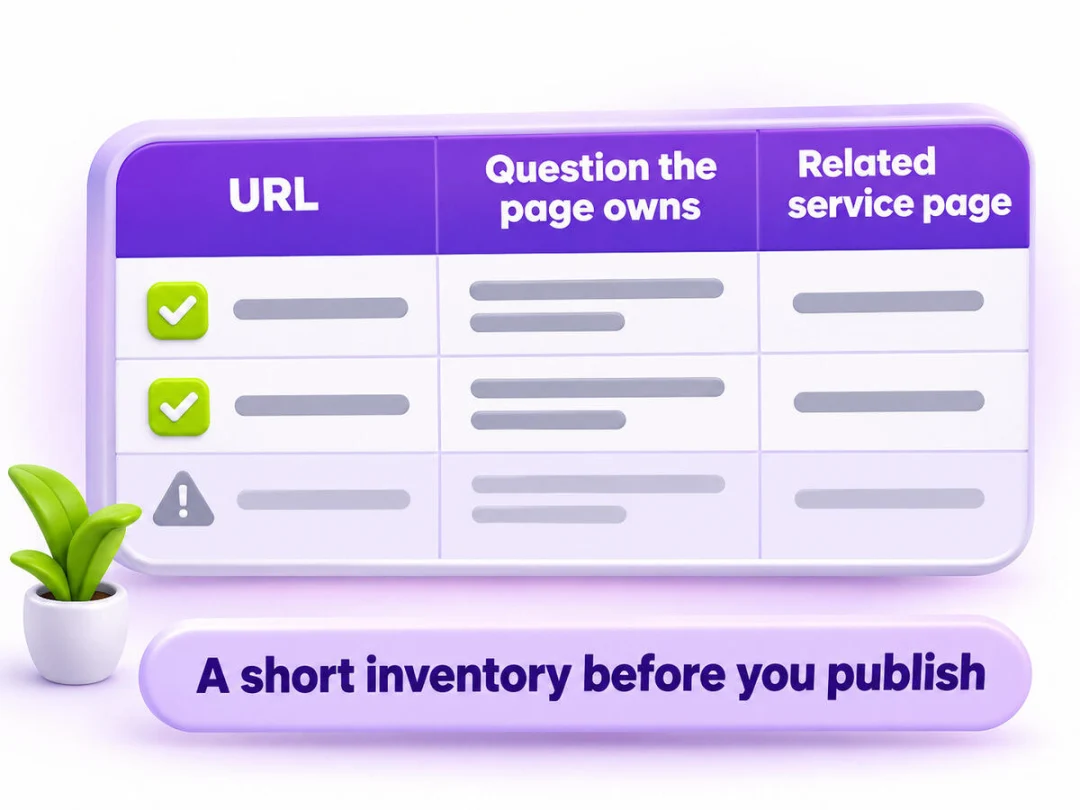
A small site does not need a large editorial database. It needs a short list you can actually maintain: the URL, the question the post owns, and the related service page, if there is one. Before a new draft goes live, search that list. If the job is already taken, rewrite the draft or add the material to the existing page.
The table below is a teaching inventory for the same fictional shop. The rows are invented. They are not a real audit and not a publishing quota.
| URL | Question the page owns | Related service page |
|---|---|---|
| /services/brake-repair | Request or understand a brake repair visit | None |
| /post/what-a-brake-inspection-includes | What happens in a brake inspection, and what to bring | /services/brake-repair |
| /post/brake-repair-everything-you-need-to-know | (Unclear: retells the service offer) | Should not stay as a second service page |
A list like this also stops a new writer from publishing “everything about family sessions” when the studio already has a session page. The inventory is a publishing check, not a 30-day marketing plan, and not a full review of overlapping queries.
A short inventory before you publish
After publishing, give the post time
A new post should be given time to be found. A couple of days of quiet data is not a verdict, and a rewrite every few days makes the pattern harder to read. Some changes can show up quickly and others can take longer, and there is no guarantee a change will produce a noticeable movement in results. This article will not invent a number of weeks, and it will not promise a top position in 30 days.
If you check the post later, check whether it still answers its own question, whether the internal links still point to the right URL, and whether a new draft would only repeat it. If both the post and the service page help, and they still do different jobs, leave them in place.
Do not judge the work by a single quiet week, and do not publish two more similar notes in order to “give SEO more pages.” One finished post with a clear job is more useful than a burst of repeats.
FAQ
What is blog SEO for a small business?
It means giving each post one job, writing that job so a person can use the page, and making the post possible to find for that question. It is not a second service page, a publishing quota, or a promise of traffic after a set number of posts.
How do I write an SEO-friendly blog post?
Choose one question, name it in the title and the opening, answer it under clear headings, and give a next step that fits that job, often a link to the service page when the reader is ready to book. Repeat a phrase only where a person needs it, not in every heading.
Should a post aim at the same query as the service page?
Usually not, if the intent is the same. Let the service page own the request to book or inquire, and let the post answer a narrower question. The post can mention the service and point to the service page; it should not try to be a second offer page.
How often does a small shop need to publish?
There is no honest universal number of posts per week or per month. A finished post that answers a real question is more useful than a series of empty notes written to hit a quota. Publish when you have a job the site does not already cover, and only at a pace you can maintain without thinning the writing.
Do I need a separate platform to write these posts?
No. This guide is not about choosing a blogging platform or installing a new editor. What matters is the text, the job it owns, and whether a person can use it. A new tool will not repair a post that repeats the service page.
Is repeating keywords the same as blog SEO?
No. Repeating a phrase unnaturally in order to manipulate results is stuffing, and that practice is treated as a harmful tactic. This work, as this article uses the term, is the broader work of writing a useful post with one clear job. Clear wording matters more than how often a phrase appears.
One useful post beats three repeats
Blog SEO for a small service business is mostly a publishing habit: one post, one job, a structure a person can use, and links that point to the right URL. Three near-identical notes will not do that work for you. Write the question you can actually answer, keep a short list so you do not repeat it, and give the finished post time.