
How to Get Clients for a Small Service Business
A fictional auto shop has been on the same street for years. The owner assumes people already know the place, so the website stays vague: a slogan, a phone number, and no explanation of what a typical brake visit includes or how to request one. A nearby driver who looks the shop up still cannot tell how to start the work.
How to get clients in a small service shop is not a purchased list and not a new tool. It is the work of making a clear offer, giving a person a next step they can actually use, staying findable near the place you work, asking for a referral after a finished job, and not dropping a request that already arrived.
What getting clients actually means
Getting clients, in this guide, means a person who needs the work can find you, understand the offer, send a request, and be answered. A name in a notebook is not yet a booked visit, and a booked visit is not yet a repeat customer. You may also hear people ask how to get customers. In a service shop, that usually points at the same job: a clear offer and a usable next step.
A lead is not yet a booked job
People who ask what is lead generation are usually asking how a first inquiry appears. In this article, lead generation means attracting that first request: a form, a call, a message, or a walk-in question about work you actually do. It does not mean the job is booked or finished.
A stack of names from a form is not a stack of jobs on the calendar. Some requests will be a poor fit, some will go quiet, and some will become visits you can serve. How to generate leads, and the close question of how to get leads, should be read in that narrower sense: you are trying to receive a real request, not to pad a list. Lead generation for small business is usually a page that states the service and a next step a person can use, not a purchased file of strangers, and not a score for the week.
A short teaching log for the same fictional shop might look like this. The rows are invented, not a measured result:
| What arrived | What it is | What it is not |
|---|---|---|
| A form asking about a brake inspection this week | A first request about a real service | A booked or paid job |
| A neighbor mentioning the shop to a friend | A referral, if the friend then reaches out | A visit you can schedule yet |
| A click on an advertisement | A visit to a page, if the person arrives | An inquiry, unless they take the next step |
If you keep a simple record of where each request came from, count booked jobs you can serve, not the longest list of names.
This is not the same as follow-up
Attracting a request and handling a request are different jobs. The first is about being found and making it possible to write in. The second starts after the message exists: someone answers the actual question, one person owns the thread, and a dated next step is written down.
This article stays on the first job, and on the habit of not losing a request once it arrives. The detailed process of answering, handing over, and knowing when to stop belongs in a neighboring guide. A reminder sequence will not repair an offer that was never clear, and collecting new names will not fix last week’s unanswered messages.
Make the website able to take the request
Website lead generation, in a small service business, is not a hidden form behind a slogan. It is a page a stranger can use: the service is named, the scope is understandable, and the next step works. That is also the practical core of how to get clients once someone has found you online. A site is not the only way a person can reach you, and work can still come from people who already know the shop. For someone who has not been in before, a page they can check makes it easier to confirm what you do, what is included, and how to send a request you will actually see.
A short spoken introduction or a social profile can help a person remember you or see recent work. Neither replaces a page they can open later to confirm the offer and write in. You do not need a downloadable file in order to receive a request, and a first-visit discount does not repair a page that never says how to book.
One clear service page beats a vague homepage
Return to the fictional shop. The homepage says “all auto work, quality you can trust,” and stops there. A stronger brake page would name the service, say what a typical inspection includes and what it does not, and show how to request a visit. The same idea applies to a fictional studio: “we capture life’s moments” is a slogan; a family-session page that lists what is included, how long a visit usually runs, and how to ask for a date is an offer a person can use.
If you are rewriting that page, the neighboring article on what to write on a service page covers structure and scope in more detail. This guide stays on one test: after reading, can a stranger send a request you will actually receive? You can still have a simple home page. The page that should carry the offer is the one for the service you most want to be found for.
A next step a person can actually use
A next step is usable when a person can complete it without guessing: a short form that arrives in an inbox you check, a phone number answered during the hours you publish, or a clear request to write and describe the job. If the button goes nowhere, the form is never read, or the number is not answered, the page has not done its job. “Tell us the vehicle and the problem, and we will reply with the next available inspection window” is a step a person can understand; “Contact us” with no path is not. Do not promise a reply time you cannot keep, and ask only for what you need to schedule the visit.
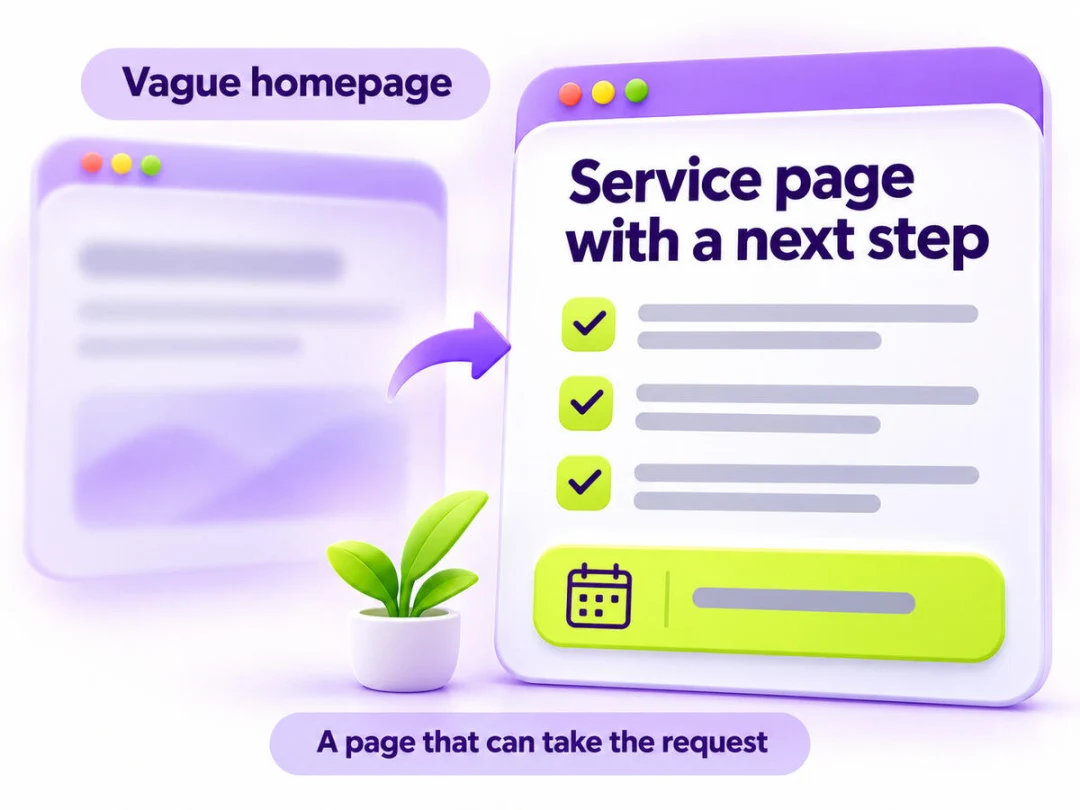
A page that can take the request
Be findable for a nearby customer
A useful page still has to be found. A nearby customer often looks a business up in a search or on a map before they visit or call. Local results on Search and Maps appear when someone looks for a business or a category near them, and consistent facts are part of that picture. This is not a promise that a profile or a page will appear first, and it is not a lesson in managing a Google profile.
The practical work you control is more modest: the name, address, phone number, hours, and service area should match across the pages a customer already checks, and the service page should describe work you actually do. If those facts disagree, a careful reader has a reason to stop. There is no single online platform that reliably produces inquiries for every trade. A marketplace, a social app, or a directory can be one more place a person looks; none of them replaces a page that can take the request, and none of them guarantees work.
Consistent facts, useful pages, not a profile lesson
Consistent business facts and useful pages are the part this article will stay on. Free local visibility work is separate from ads: it is about being findable near the place you work, not about buying a slot or automating a profile. This page will not walk through profile settings, posting schedules, or replies to reviews.
Photos of your own work, used with permission, help a stranger see the kind of job you do. They do not replace the written offer or the next step. Do not invent reviews or a map ranking, and do not treat a profile as a substitute for the page you control.
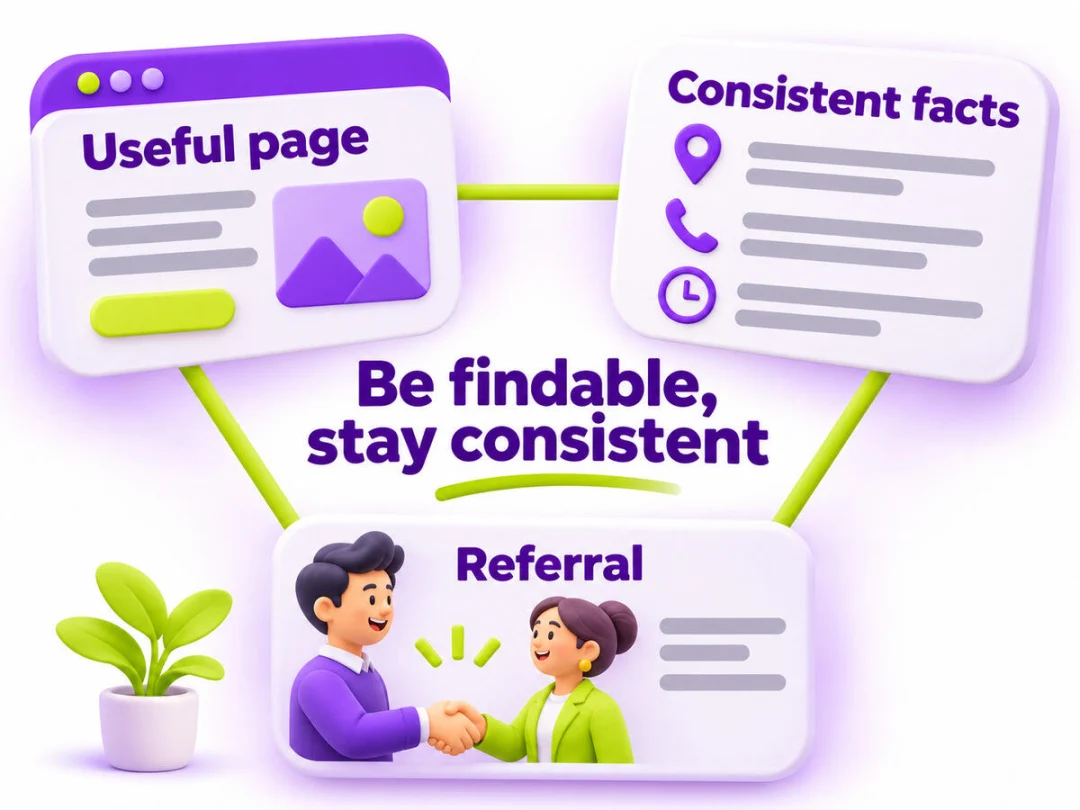
Be findable, stay consistent
Referrals and introductions you can actually ask for
A referral is a person you already served, or a professional who sees the same customers, pointing someone toward work you actually do. The introduction often arrives with a little context, which is useful. It is not a machine that produces a steady calendar. Referrals depend on someone else remembering you at the right moment, so the flow can be uneven. They help; they do not replace a page a new person can check, or a reply when a request arrives.
You do not need a formal program or a reward ladder in order to ask. A simple, specific question after a completed job is enough, and it should be easy to decline.
Ask after a completed job, not from a purchased list
The right time to ask is after the work is done and the customer is satisfied, not while they are still waiting. Keep the request specific: “If someone you know needs a brake inspection, they can use the same page you used, or you can share our number.” Do not pressure a person who is unhappy, and do not make a referral feel required.
A purchased list of names is a different thing. Those people did not ask you for the work. Collecting or buying contacts is not how to get more leads in the sense this article uses: the aim is a request from someone who needs the service, not a longer file of strangers. Rules for commercial messages vary by channel and by place; this guide is not legal advice, and it will not provide templates for unsolicited outreach.
You can also ask a complementary business, a wedding planner who already sends portrait clients, or a detail shop that does not repair brakes, whether they sometimes meet people who need your service. That is an introduction between people who already share a customer, not a rented list. If you keep a short record, note when a new request came from someone you already served. That is a check, not a rate to advertise.
A short paid test is not a substitute for a clear offer
A short paid placement can help when you need visibility on a short clock and you can fund it: a seasonal offer, a new service, or a window in which you have capacity. It can put the offer in front of people who are already looking for that work. It is not a substitute for a page that can take the request, and it is not a promise of booked jobs this week.
If a person reaches a slogan with no next step, you can pay for visits that never become inquiries. The page comes first. Then, if you still want a time-bounded test, you can consider paid visibility. This is not a campaign-setup guide. It does not cover bidding, budgets, or account settings, and it does not compare channels as a separate lesson.
A click is not an inquiry, and an inquiry is not a booked job. If you later judge a small test, judge it by work you could actually serve and by what you spent, not by how many names appeared. Cost per conversion is cost divided by the conversions you chose to count; that is a definition, not a typical price for a shop like yours. This article will not invent a cost per lead or a budget split. A discounted first session can be a clear offer if the page says what is included and how to request it, but it cannot repair a vague homepage.
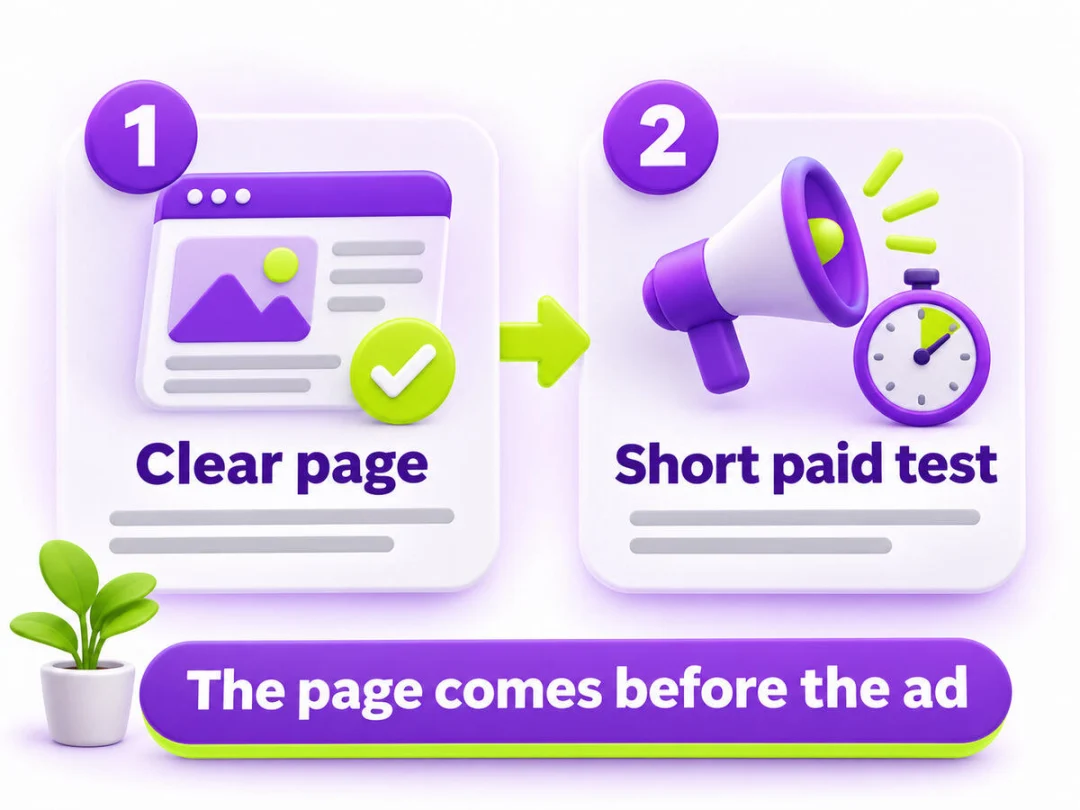
The page comes before the ad
Once the inquiry arrives, do not drop it
The work of getting a client is not finished when the form is submitted. If the request sits in a shared inbox, or two people each assume the other will reply, the person who wrote in has no next step. Give the message an owner and a dated action before you polish the wording. Confirm that the request arrived, answer the question that was asked, and record who will handle the next contact.
The rest of the process, how to write useful replies, when to pause, and when to stop, is covered in the neighboring article: once the inquiry arrives, give it an owner. This article will not repeat that workflow, and it will not recommend software to automate it. A useful first reply addresses what the person asked. If they wanted a brake inspection this week, start there. A broad introduction to every service can wait. If the request is a poor fit, say so and close the thread politely; if it is a good fit, give a next step you can keep.
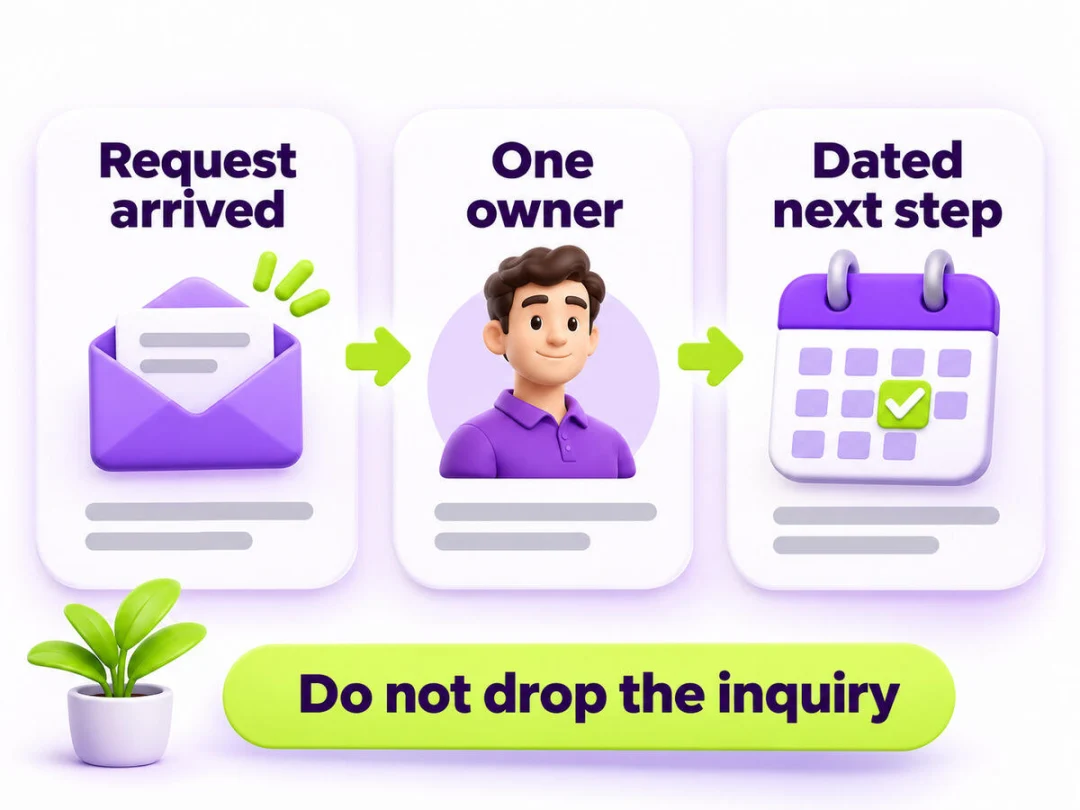
Do not drop the inquiry
FAQ
What actually helps a small service shop get clients?
Start with a clear offer and a page that can take a request. Stay findable nearby, ask for a referral after a completed job, and answer the inquiries you already have. You do not need a purchased list or a new tool. That is the practical reading of how to get clients in this guide.
How is attracting a first request different from handling it later?
Getting a lead is the work of being found and receiving a first request. Follow-up starts after that request exists: someone answers it, owns the conversation, and writes down a next step. They are connected, but they are not the same job.
Is a website required before new people can reach you?
No, a website is not the only path. People who already know you can still call or walk in. For someone new, a clear page makes it easier to check the offer and send a request you will actually see. This is not an argument for a particular website builder.
How can I get more leads if I do not buy a list?
Tighten the service you want to be found for, give a next step a person can use, and ask for a referral after work you have already finished. Being findable nearby helps a new person reach that page. None of this guarantees more requests, and a bought list is not a substitute for a clear offer.
Can referrals carry the business by themselves?
They can bring real work, and they are worth asking for after a job well done. They are not enough on their own if a new person still needs a page to check and a reply when a request arrives. The flow can be uneven, because it depends on other people remembering you.
Should I start with ads or with my pages?
Start with a page that can take the request: the service is named, the scope is understandable, and the next step works. Paid visibility can help on a short deadline once that page exists. An advertisement to a vague homepage spends budget without giving the person a way to write in. This is not a comparison of advertising channels.
A clear offer beats a bought list
How to get clients is mostly ordinary work: a page that can take the request, facts that stay consistent, a referral you can ask for after real work, and an owner for the message that already arrived. A purchased list will not replace that. Make the offer clear enough that a stranger can use it, and do not lose the request that arrives.